If you’re self-employed, you’ll be asked for your UTR number sooner or later, usually right when you sit down to do your tax return. So what is a UTR number? It’s the 10-digit reference HMRC gives you when you register for Self Assessment, and you can’t file your return without it.
Here’s the plain-English version, the way I’ve explained it to sole traders over 10 years as a Chartered Accountant: what a UTR is, where to find yours, how to get one if you’re new, and what to do if you’ve lost it.
Table of Contents
What is a UTR number?
UTR stands for Unique Taxpayer Reference. It’s a 10-digit number that HMRC uses to identify you for Self Assessment. You might also see it called your “tax reference”.
You get a UTR when you:
- register for Self Assessment (for example, when you become self-employed), or
- set up a limited company (the company gets its own UTR for Corporation Tax).
It’s not the same as your National Insurance number. You’ll usually need both, so keep them somewhere safe together.
Where to find your UTR number
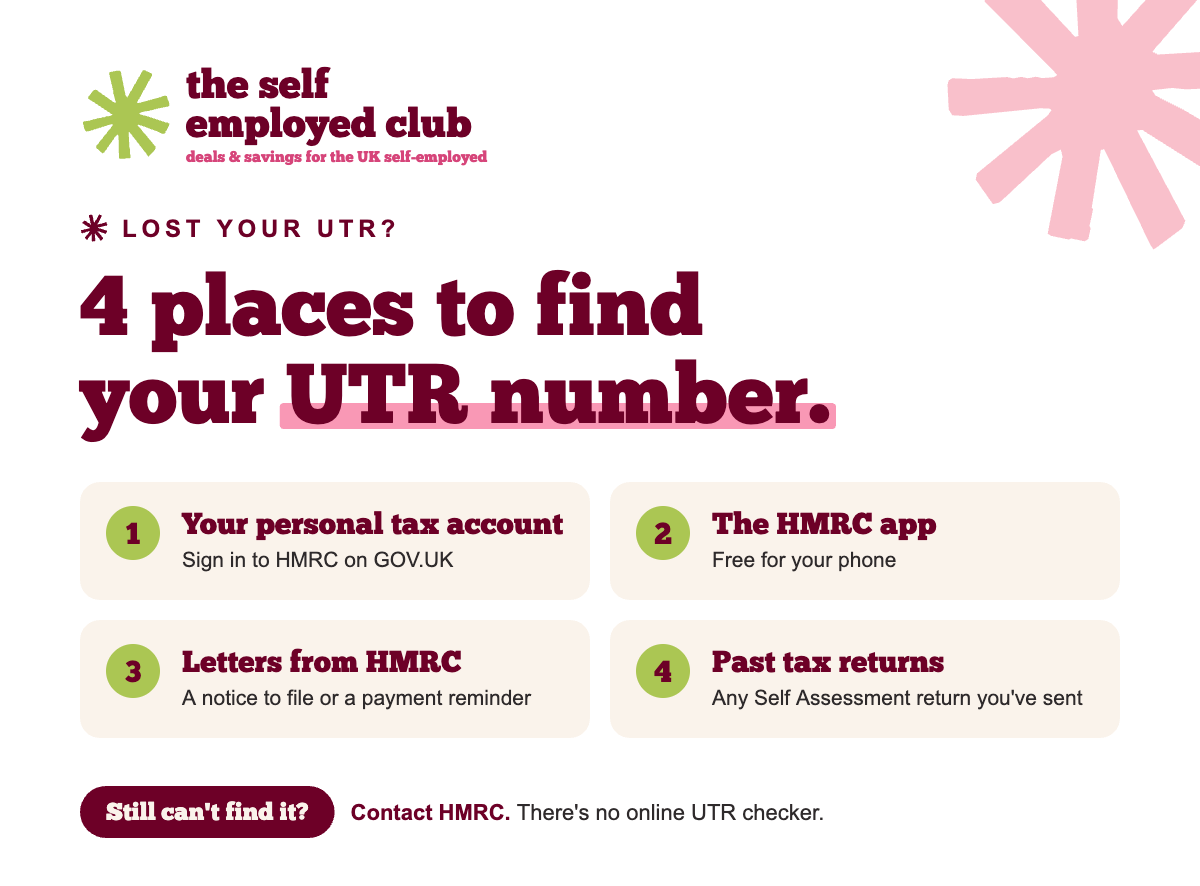
If you’ve already registered, your UTR is in a few places. As a sole trader, check:
- Your HMRC personal tax account (sign in on GOV.UK)
- The HMRC app
- Letters from HMRC, such as a notice to file a tax return or a payment reminder
- Your previous tax returns
My advice after more than 10 years as an accountant to sole traders: the day your UTR letter arrives, take a photo of it or save the number in your accounting app. Future you will be grateful in January.
How to get a UTR number
You don’t apply for a UTR on its own. You get one by registering for Self Assessment.
- Check you need to register. GOV.UK has a short checker that tells you whether you need to send a tax return.
- Register for Self Assessment on GOV.UK. It’s free. Our step-by-step guide to registering as self-employed walks you through it.
- Wait for your letter. HMRC says you’ll usually get your UTR by post around 15 days after you register. It takes longer if you live overseas.
When do you need to register?
By 5 October after the end of the tax year you started working for yourself. For the 2025 to 2026 tax year (6 April 2025 to 5 April 2026), that’s 5 October 2026. Register late and you could get a penalty.
If you’ve missed that date, register as soon as you can. You still need your UTR in time to file by 31 January (see our Self Assessment deadlines guide).
Watch out for paid “UTR services”
Some websites charge to “apply for your UTR”. Registering with HMRC is free, so there’s no need to pay anyone to do it for you.
Lost your UTR number?
Check your personal tax account and the HMRC app first, then any old HMRC letters or tax returns. If it isn’t on any of those, contact HMRC and they can help.
There’s no online “UTR number checker”. The places above are where your number lives.

Join the Club — it’s completely free
Members get handpicked deals and discounts on the tools, services and everyday essentials UK self-employed people actually use. Free to join, no catch.
UTR numbers for limited companies
A limited company gets its own UTR for Corporation Tax, separate from your personal one. If you run a company, you can request the company’s UTR online, and HMRC posts it to the company’s registered address at Companies House. Not sure which set-up is right for you? See is it worth setting up a limited company.
What’s next once you have your UTR
With your UTR in hand you’re ready to file. Our guide to doing your Self Assessment tax return as a sole trader takes you through it step by step, and self-employed tax explained covers what you’ll actually pay. Before you file, check you’re claiming all your allowable expenses.
And if you’re setting up your business admin, The Self Employed Club has deals on accounting software and business banking. It’s free to join for the UK self-employed.
FAQs
What is a UTR number?
A 10-digit Unique Taxpayer Reference that HMRC gives you when you register for Self Assessment or set up a limited company.
How do I get a UTR number?
Register for Self Assessment on GOV.UK. It’s free, and your UTR usually arrives by post around 15 days later.
Where can I find my UTR number?
In your HMRC personal tax account, the HMRC app, letters from HMRC such as a notice to file, or your previous tax returns.
Is my UTR the same as my National Insurance number?
No. They’re two different numbers, and you’ll usually need both.
Is there a UTR number checker?
No. If you can’t find your UTR in your personal tax account, the HMRC app or your HMRC letters, contact HMRC.
Want to Read More About Self-Employed Tax & Self Assessment?
More guides like this are in Money & Tax. Here are some of the most popular:

About the Author
Anita Forrest
Chief Deal Hunter
Anita is a Chartered Accountant, self-employed business owner and the person behind The Self Employed Club. She created the Club to help UK self-employed people spend less and keep more of what they earn, by bringing useful deals for their business and everyday life together in one place.
She writes about the things you actually need to know when you work for yourself, in the way she would want someone to explain them to her - clearly, simply and without the usual business waffle.
Join the Club — it's completely free
Members get handpicked deals and discounts on the tools, services and everyday essentials UK self-employed people actually use. Free to join, no catch.